

One of my relatives uses a rollator and another uses a walker. When I observed the convenience of the rollator, I thought about recommending that my other relative switch over from her walker. But then I observed how she used her walker and quickly realized that a rollator would be a BIG mistake!
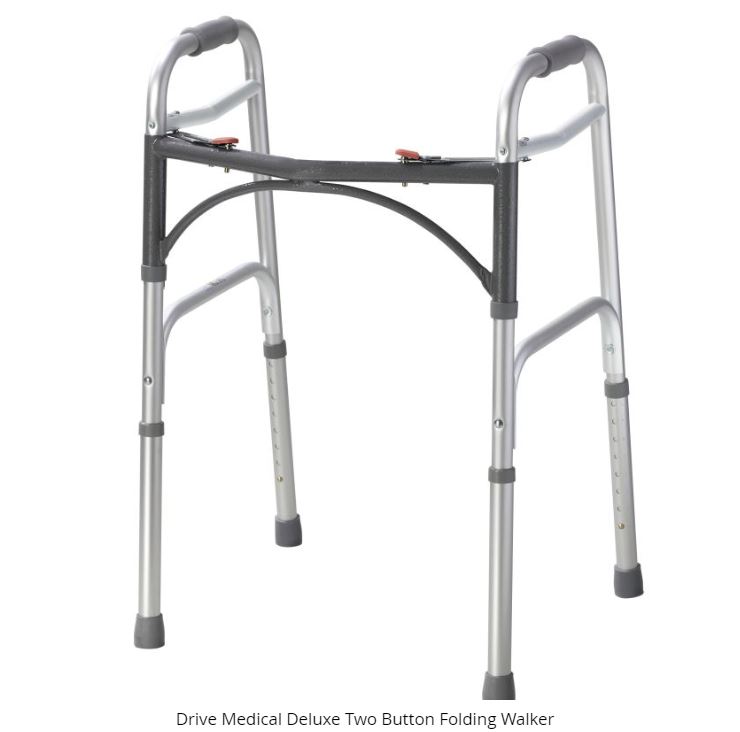 |
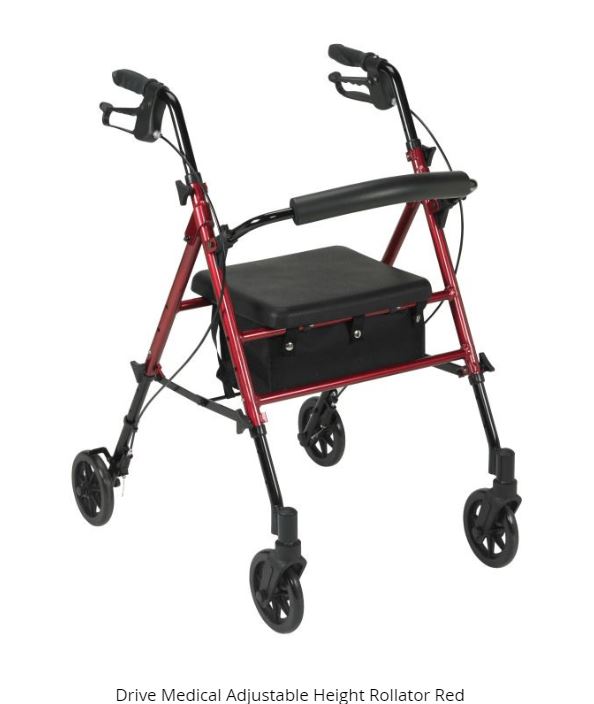
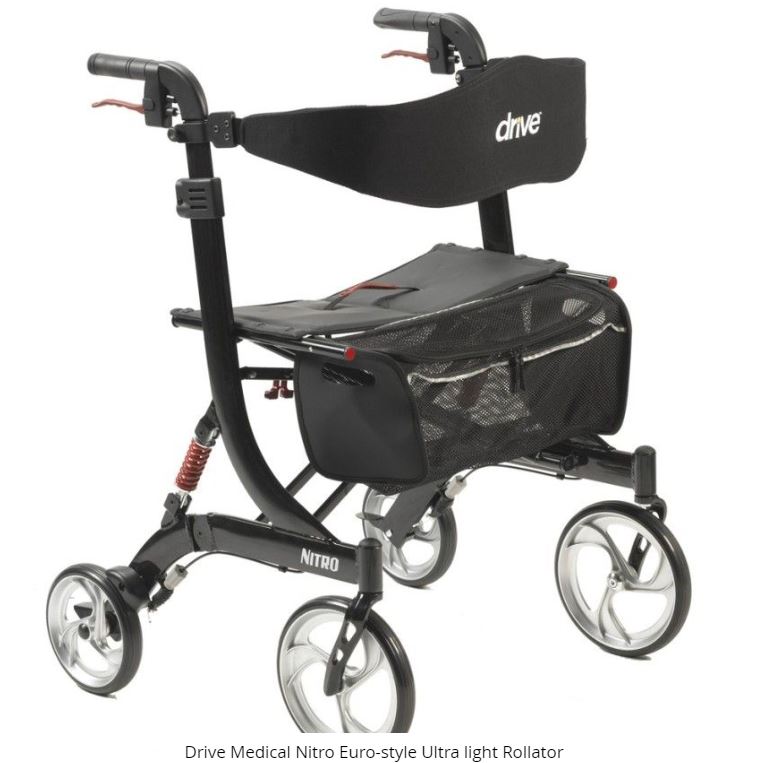
What I observed is how she relied on the stability of the walker to bear her weight when she moved forward. Since the walker doesn’t roll, she can put her weight on it and lift herself forward, then move the walker forward. The rollator, on the other hand, has four wheels to help the user move forward. It also has a seat to rest upon if you get tired and need to take a break. Rollators are easy to maneuver because the wheels swivel and there are handbrakes to help maintain control. |
|
Those aren’t the only differences between a walker and a rollator. Or maybe you are just starting to find you need a little assistance with balance and ambulation and are considering a cane. This article will provide comparisons of the three devices and suggest some scenarios when each is appropriate. Disclaimer – this article is not intended to give medical advice. Please consult your physician about which medical device is best for your situation. According to the America Family Physician: |
|
“Most patients with assistive devices have never been instructed on the proper use and often have devices that are inappropriate, damaged, or are of the incorrect height. Selection of a suitable device depends on the patient's strength, endurance, balance, cognitive function, and environmental demands.”
 |
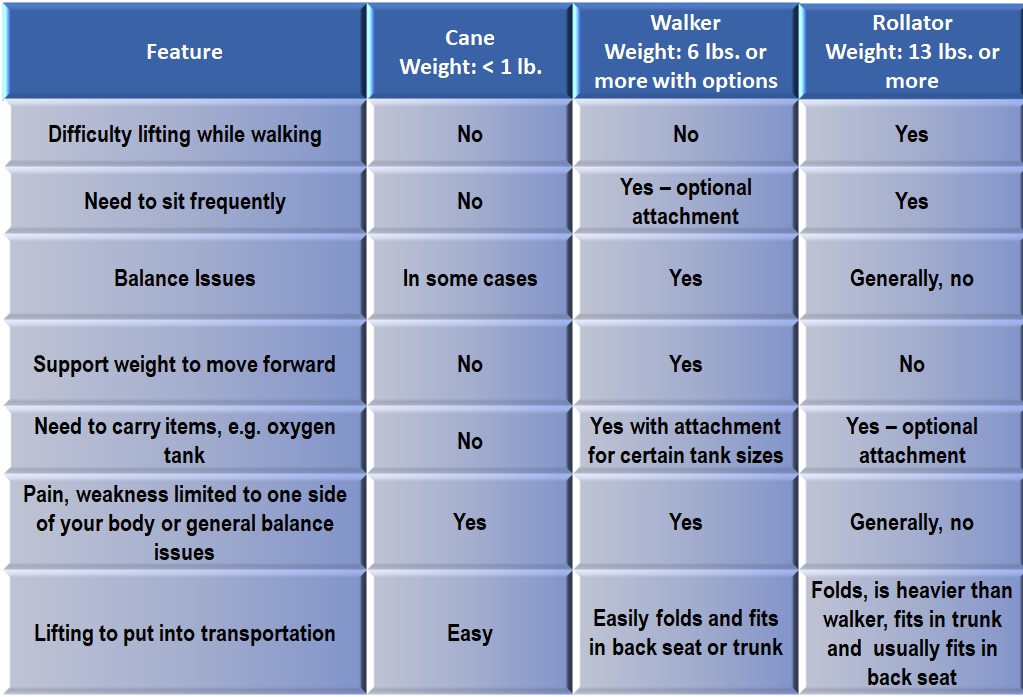
Please keep their advice in mind as you review these guidelines. Follow your physician’s recommendations and be properly instructed and fitted when you choose which assistive device is right for you. The following chart lists some of the key features that you might look for in an assistive device such as a cane, walker or rollator. The second column shows which features are supported by using a cane and the approximate weight of a cane. The third column lists the same information for a walker and the fourth column for a rollator. |
To learn more about the walking assistive products from Living Well Stores, click here or call our one of our outstanding customer service folks at 800-704-8432. They are knowledgeable people who will talk with you on the phone.
If you have a question, comment or idea for an article, email us at [email protected].
If you are considering a mobility scooter instead of a cane, walker or rollator check out our series of articles on selecting a mobility scooter. Click here to see our impressive line of mobility scooters.
Selecting the Right Scooter for Now and For the Long Term https://www.livingwellstores.com/blog/post/selecting-the-right-scooter-for-now-and-for-the-long-term
How to Buy a Mobility Scooter – The In’s & Out’s of Choosing the Right Scooter https://www.livingwellstores.com/blog/post/how-to-buy-a-mobility-scooter-the-in-s-out-s-of-choosing-the-right-scooter
Power Scooter Delivery Choices https://www.livingwellstores.com/blog/post/power-scooter-delivery-choices
How Our Buy Now, Pay Later Program Works – It’s So Easy! https://www.livingwellstores.com/blog/post/how-our-buy-now-pay-later-program-works-it-s-so-easy